Residential · Commercial · Industrial
Floors built for the work they do
Beautiful, hard-working floors for home garages, workshops, warehouses, kitchens, auto shops, retail and more. We match the coating to the concrete and explain the choices in plain English.

- Projects
- Homes, businesses, warehouses, kitchens and industrial facilities
- Systems
- Epoxy, urethane cement, polyaspartic, metallic epoxy, slip-resistant textures
- Requests
- Online quote form; photos or a share link are optional
From loose material to working surface
Built in layers.
Locked into one floor.
Scroll to follow the system: prepared concrete, resin, broadcast media and a protective topcoat becoming one continuous surface.
- 01 Profile
- 02 Build
- 03 Broadcast
- 04 Seal
Prepared concrete receives the system.
Start with the floor you have
Find your facility below. Each page explains what the floor is exposed to, which systems usually fit, and when the obvious choice is the wrong one.
| Facility | Usual starting point | Read |
|---|---|---|
| Home garage, basement or workshop | Floor condition, moisture and the way you use the room | Residential floors |
| Warehouse or distribution | Joint repair, high-wear lanes, phased work | Warehouse floors |
| Plant or industrial space | Chemical-resistant and heavy-duty systems | Industrial coatings |
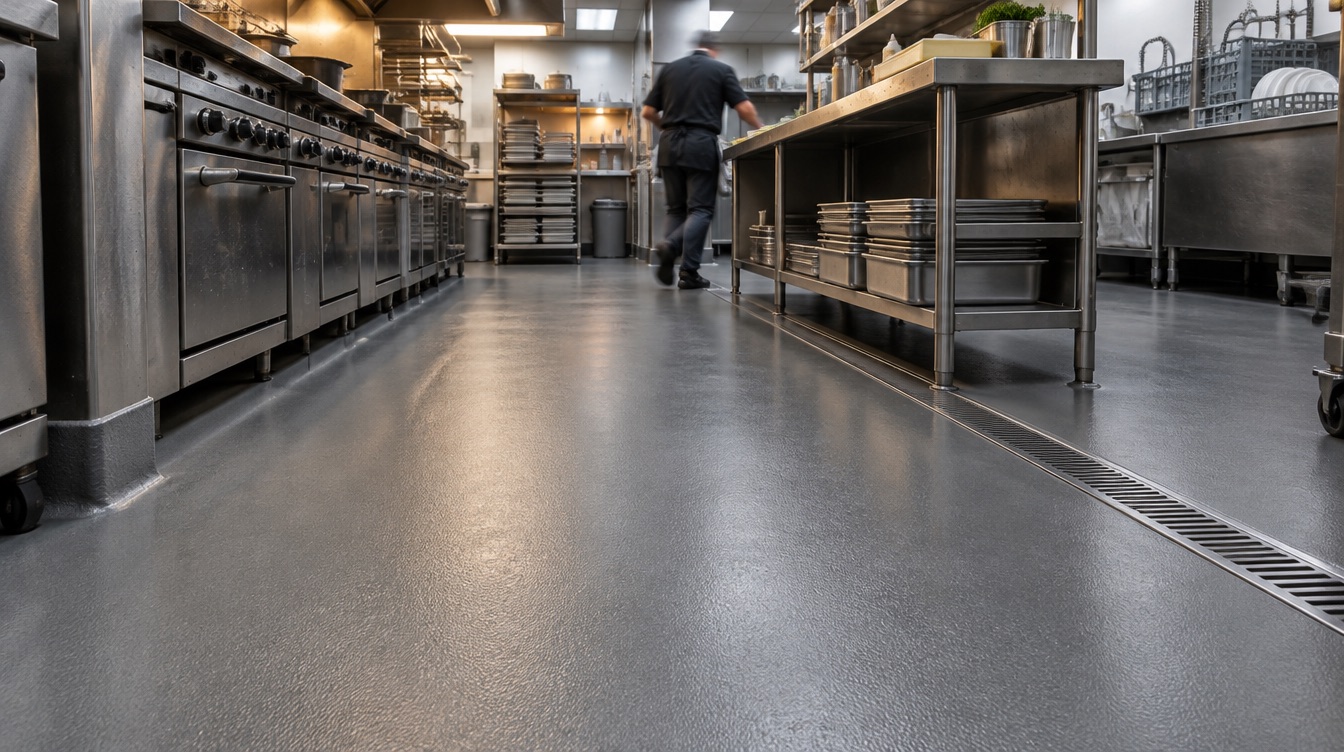
| Restaurant kitchen | Urethane cement with cove base | Restaurant kitchen floors |
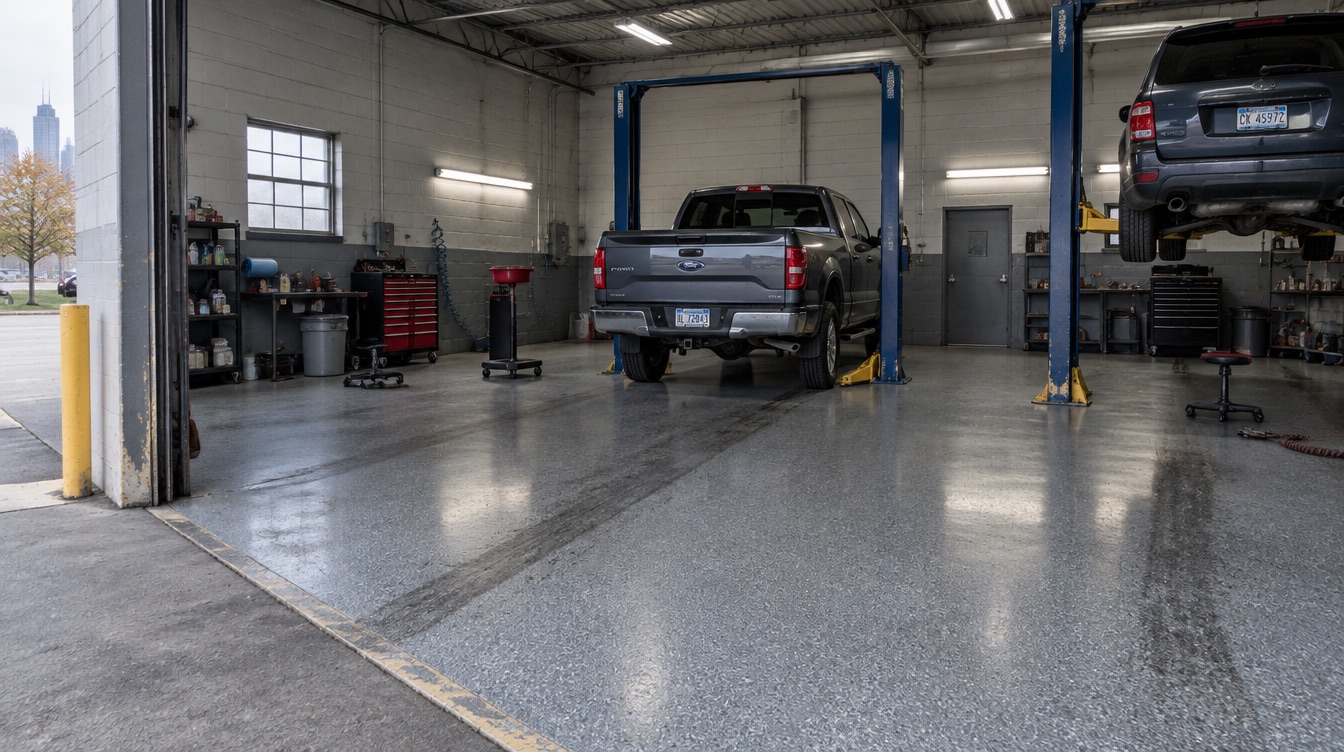
| Auto shop or service bay | Broadcast epoxy, chemical-resistant topcoat | Auto-shop floors |
| Retail or showroom | Clear-coated or metallic finishes | Metallic epoxy |
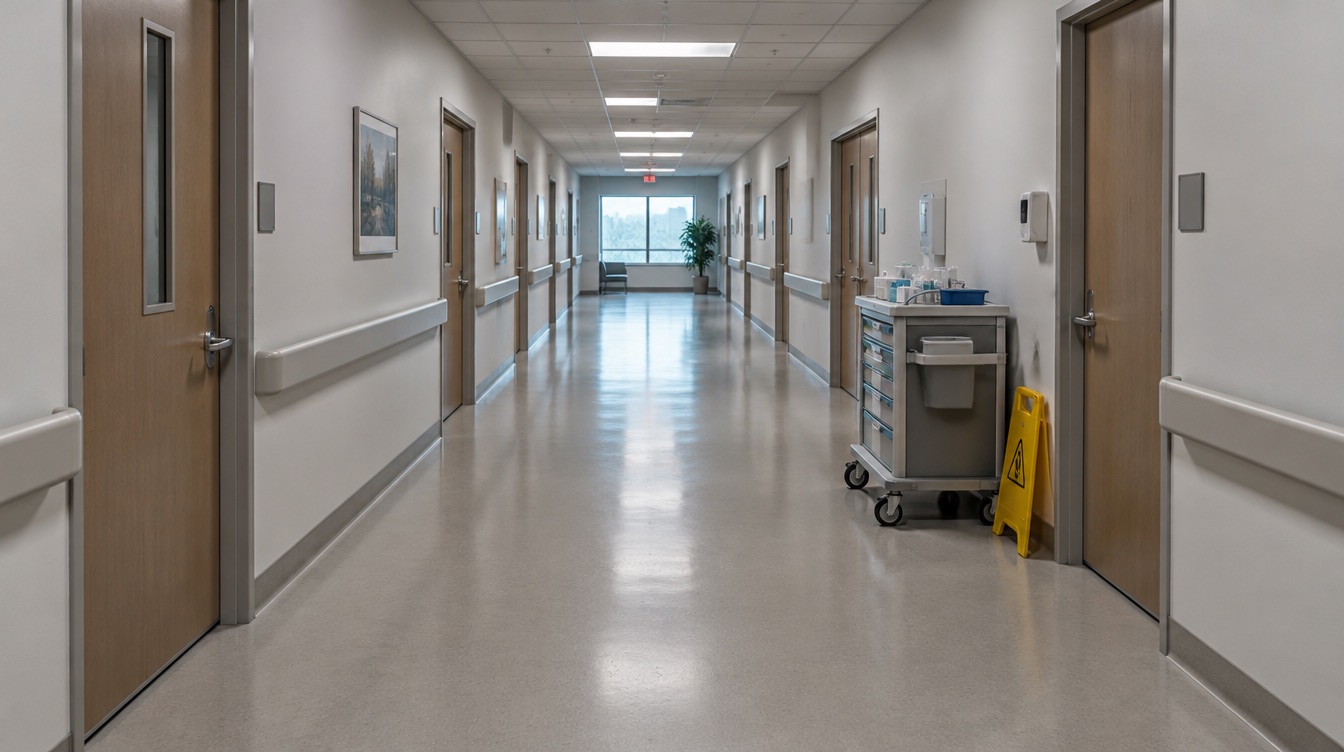
| Gym, clinic or office | Cleanable, low-odor installation | Clinic flooring |
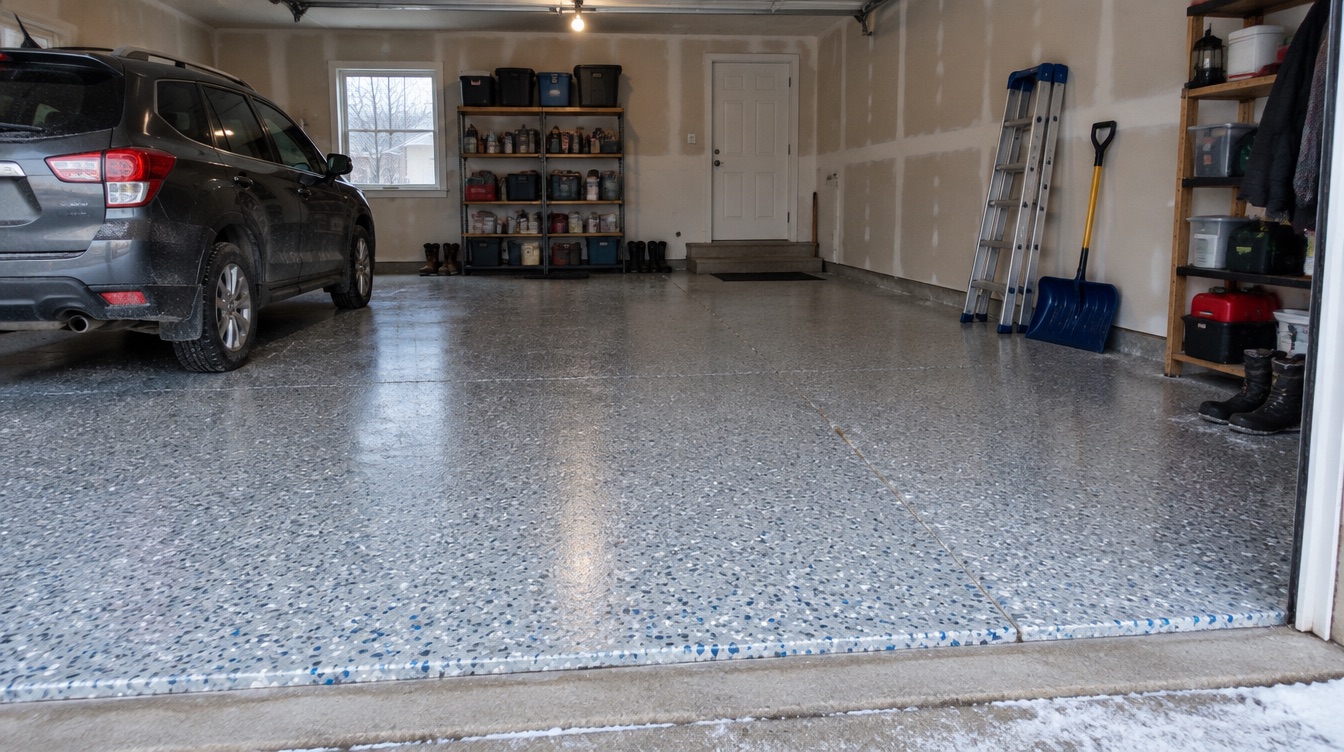
| Condo or HOA garage | Slip texture, salt resistance, UV-stable topcoat | Polyaspartic |
Three systems, three different jobs
- Epoxy
- Strong adhesion and build. Sensitive to slab moisture; standard epoxy yellows in sunlight. The workhorse for most interior commercial floors.
- Urethane cement
- Handles hot water, steam and thermal cycling, and tolerates more slab moisture. The default for commercial kitchens and food processing.
- Polyaspartic
- Fast cure and UV stable. Useful when a space can only close briefly, with a short working time that demands careful installation.
How a project runs
- 01
Inspect
Floor condition, exposure, access, moisture and downtime.
- 02
Prepare
Mechanical profiling, removal and repairs for the required bond.
- 03
Build
Primer, body coat, broadcast and details installed to the written scope.
- 04
Protect
Topcoat, cure windows, handover and practical care guidance.
See the floor in a real space
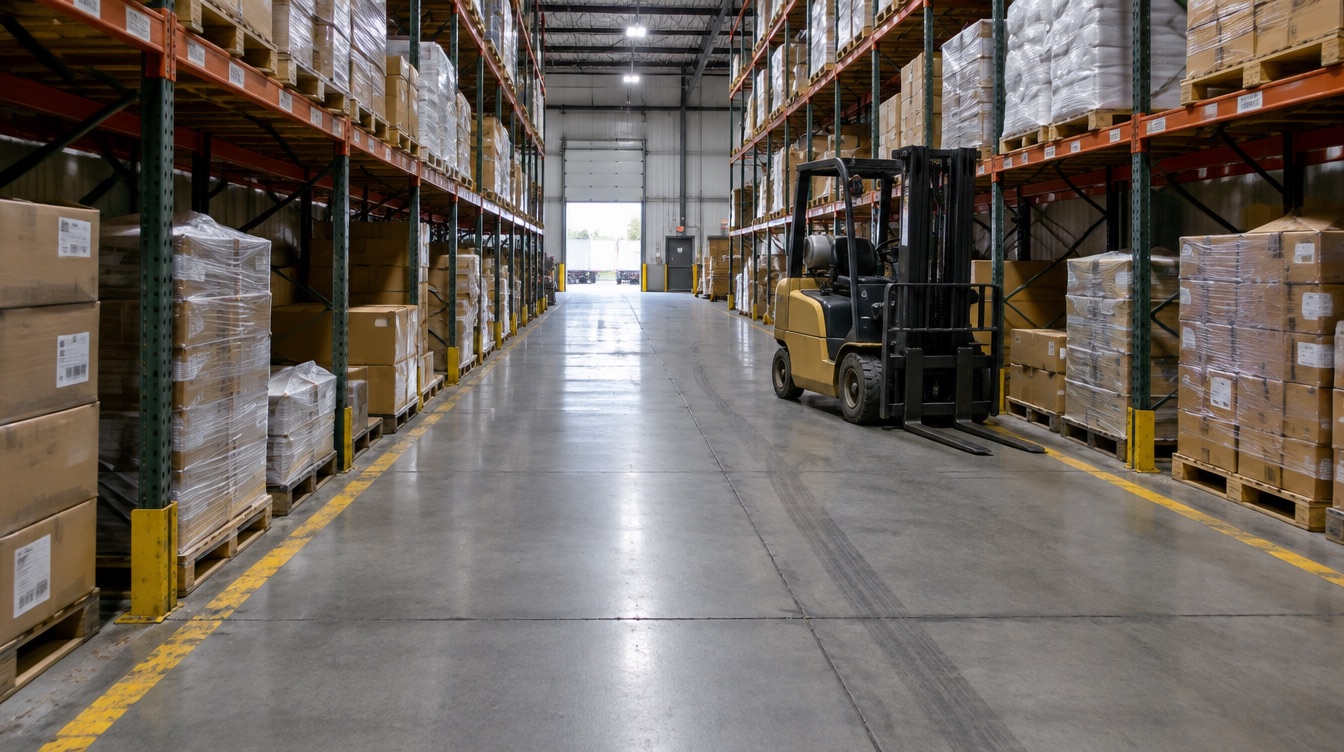
The right floor should make sense in the room around it. These art-directed scenes show the kinds of environments we plan for; they are visual guides, not claimed customer projects.
What you will not find here
No stock photos of other people’s floors, no borrowed reviews and no per-square-foot price that ignores your slab. Project records will be published only for completed work, with the client’s permission. Until then, this site explains how we make decisions so you can judge the approach for yourself.
Service areas
Work is centered on Chicago and Cook County. We also serve Lake County in Northwest Indiana, and Kenosha and Racine counties in southeast Wisconsin. Edge ZIP codes are reviewed case by case.
Questions people ask
What kind of floor should I start with?
Start with the space and exposure, not the product name. A home garage, restaurant cook line and forklift aisle need different systems even when all are described as “epoxy floors.”
Can I request a quote without photos?
Yes. Send the ZIP code, approximate size and floor condition now; photos or a share link can be added later.
Do you serve residential customers?
Yes. Residential work includes garages, workshops, basements, utility rooms and concrete home kitchens where a coating is an appropriate fit.
Tell us about the floor
The quote form takes a few minutes. It asks for the ZIP code, floor area and current condition. Add photos, paste a share link or send visuals later—it is your choice.